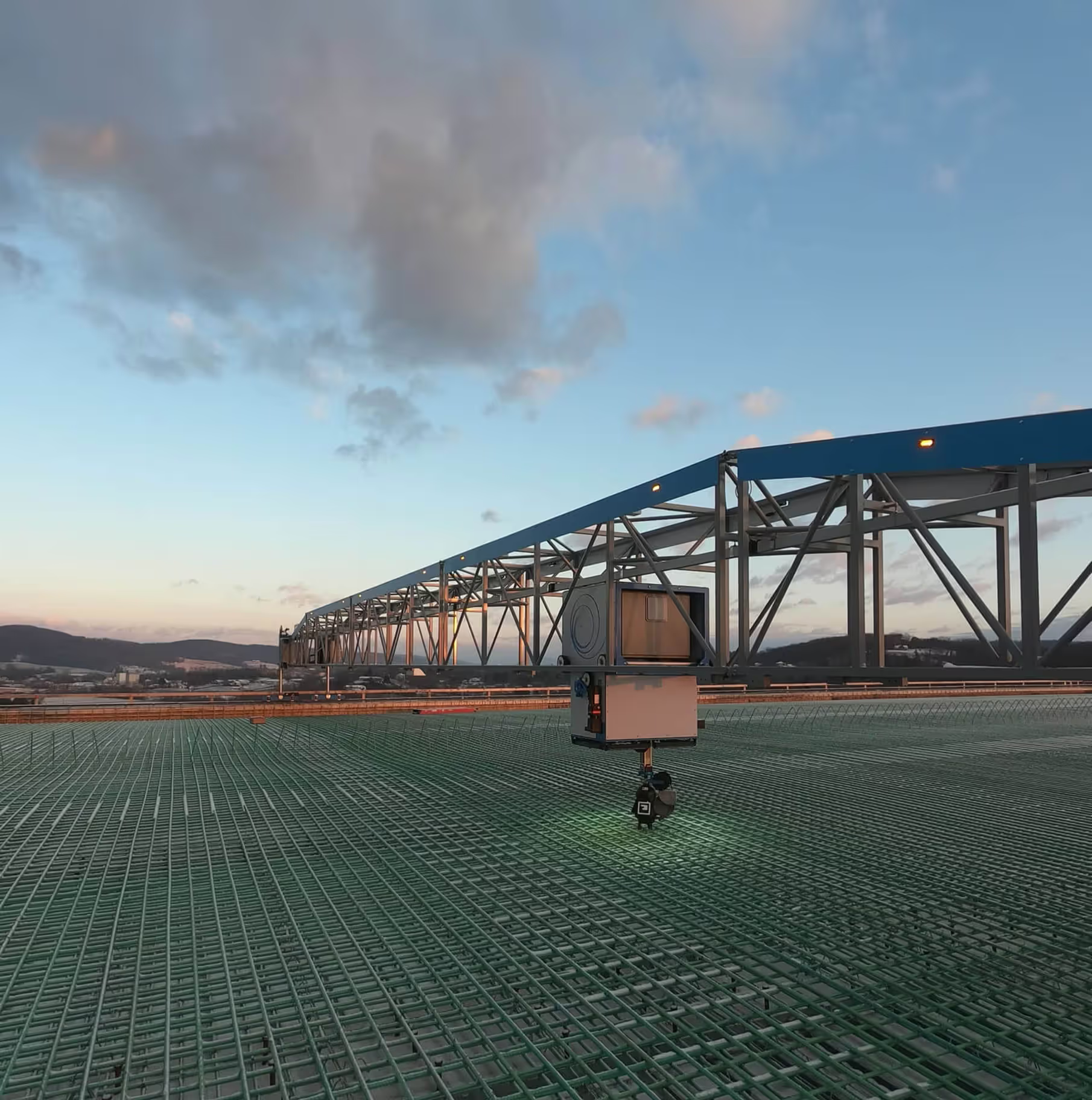

Alligator River, NC: Shelby Erectors and Skanska Put TyBOT to Work on Fiberglass Rebar

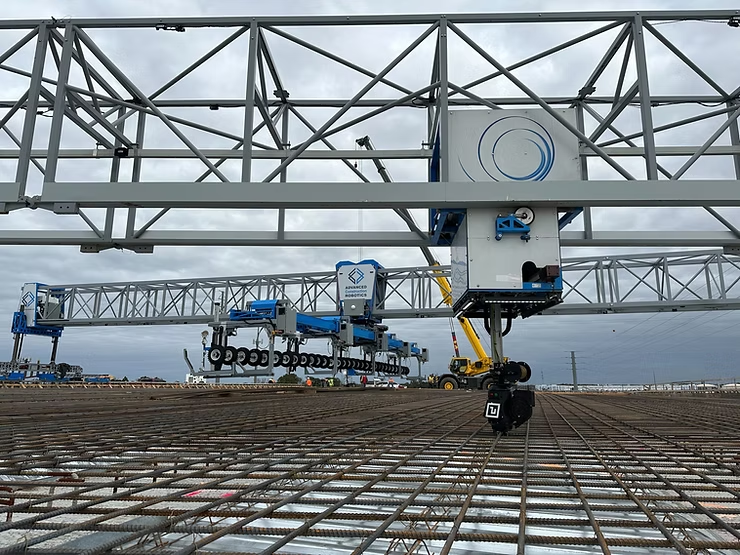
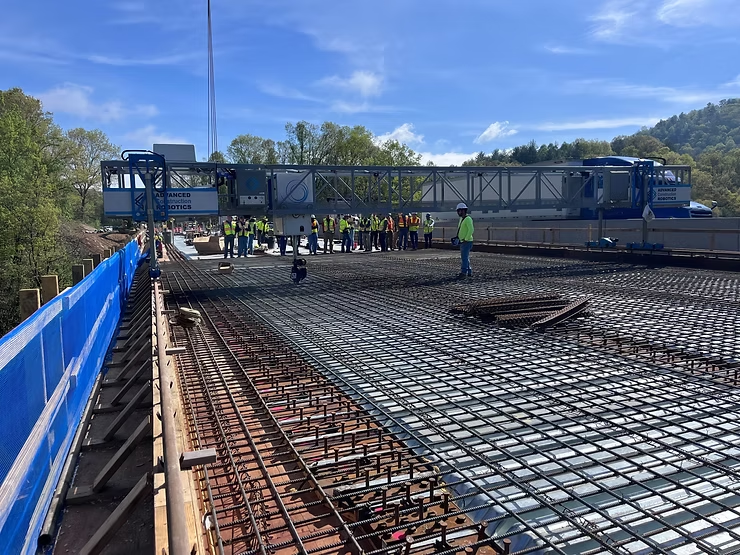
On one of the largest bridge projects on the North Carolina coast, Shelby Erectors is using two TyBOTs from Advanced Construction Robotics to tie the deck of the new Alligator River Bridge. Working for general contractor Skanska, Shelby's crew is using TyBOT to tie glass fiber-reinforced polymer (GFRP) rebar, a corrosion-proof material chosen for the bridge's saltwater environment. The results have caught the attention of Skanska, NCDOT, and the local press.
The job
The new bridge replaces the Lindsay C. Warren Bridge, the 65-year-old swing span that carries U.S. 64 across the Alligator River to Dare County. Skanska is building a 3.2-mile, high-level fixed bridge with two 12-foot lanes, 8-foot shoulders, and 65 feet of vertical clearance for marine traffic. The project is on track to open in 2028.
The first TyBOT 3.0 unit was delivered in June. The Shelby crew (longtime TyBOT users) gave quick feedback on the newest features of this latest model. They liked the new belly box, and a trainee who had run earlier TyBOTs singled out the upgraded remote control as an improvement.
Two TyBOTs, Two Fronts
Once Skanska shifted from pier work to the superstructure this summer, Shelby asked for more capacity. In late August, Shelby requested a second TyBOT to open a second work front, and it arrived on the eastern end of the bridge on September 21. With both robots running, the crews completed more than 74,000 ties in just over three weeks. As of mid-November, TyBOT has completed more than 277,000 ties on the bridge.
What Skanska Is Saying
Skanska showcased TyBOT as one of the new technologies being used on this project, noting that TyBOT can complete up to 1,100 ties per hour and hold that pace without fatigue. Skanska USA Senior Vice President and Project Director Phillip LeFave told reporters the machines complete 5,000 to 9,000 ties in a single shift. Kipp Tabb from CoastalReview.org asked whether a skilled worker or TyAlligator River BridgeBOT is faster, he said, “It's a tortoise and a hare type thing. You can beat it in the short run, but in the long run, the machine will always last longer.” He also pointed to the benefit for the crew.
“[TyBOTs] reduce the repetitive motions that lead to muscle strain and injury to employees,” LeFave said, allowing "our guys [to] keep coming back to work the next day.”
Skanska Project Manager Eddie Restrepo sees the same benefit. “With TyBOT, we're not just building faster, we're building safer. Automation takes on the repetitive tying while our craft professionals focus their skills on higher-value work,” he said. Restrepo first saw TyBOT on an I-4 job in Florida in 2020. On an early visit to the Alligator River deck, he noted its ties were much better than handheld tie-gun ties, which matters on GFRP where bars can slip.
Looking Ahead
The biggest stretch is still ahead. LeFave said the roadway alone will require 5.1 million linear feet of GFRP bar, and the ties completed so far are about 15 percent of the 1.8 million estimated for the job. “Our big focus going into 2027 and throughout the entire year 2027 is the bridge decks,” he said, with crews working from the east and west ends toward the center. Both TyBOTs remain on the job. Shelby's crew keeps the bar going down while TyBOT handles the repetitive bending and tying. That keeps ironworkers on the skilled work and out of the motions that wear them down.
For ACR, the project is proving TyBOT on GFRP at scale and giving us field data that shapes our future developments. For Shelby and Skanska, it is showing how robotics can keep a long, remote marine bridge moving. As Restrepo put it, “There's a lot of pride in knowing that what we learn here can help shape how projects are built in the future.”


On one of the largest bridge projects on the North Carolina coast, Shelby Erectors is using two TyBOTs from Advanced Construction Robotics to tie the deck of the new Alligator River Bridge. Working for general contractor Skanska, Shelby's crew is using TyBOT to tie glass fiber-reinforced polymer (GFRP) rebar, a corrosion-proof material chosen for the bridge's saltwater environment. The results have caught the attention of Skanska, NCDOT, and the local press.
The job
The new bridge replaces the Lindsay C. Warren Bridge, the 65-year-old swing span that carries U.S. 64 across the Alligator River to Dare County. Skanska is building a 3.2-mile, high-level fixed bridge with two 12-foot lanes, 8-foot shoulders, and 65 feet of vertical clearance for marine traffic. The project is on track to open in 2028.
The first TyBOT 3.0 unit was delivered in June. The Shelby crew (longtime TyBOT users) gave quick feedback on the newest features of this latest model. They liked the new belly box, and a trainee who had run earlier TyBOTs singled out the upgraded remote control as an improvement.
Two TyBOTs, Two Fronts
Once Skanska shifted from pier work to the superstructure this summer, Shelby asked for more capacity. In late August, Shelby requested a second TyBOT to open a second work front, and it arrived on the eastern end of the bridge on September 21. With both robots running, the crews completed more than 74,000 ties in just over three weeks. As of mid-November, TyBOT has completed more than 277,000 ties on the bridge.
What Skanska Is Saying
Skanska showcased TyBOT as one of the new technologies being used on this project, noting that TyBOT can complete up to 1,100 ties per hour and hold that pace without fatigue. Skanska USA Senior Vice President and Project Director Phillip LeFave told reporters the machines complete 5,000 to 9,000 ties in a single shift. Kipp Tabb from CoastalReview.org asked whether a skilled worker or TyAlligator River BridgeBOT is faster, he said, “It's a tortoise and a hare type thing. You can beat it in the short run, but in the long run, the machine will always last longer.” He also pointed to the benefit for the crew.
“[TyBOTs] reduce the repetitive motions that lead to muscle strain and injury to employees,” LeFave said, allowing "our guys [to] keep coming back to work the next day.”
Skanska Project Manager Eddie Restrepo sees the same benefit. “With TyBOT, we're not just building faster, we're building safer. Automation takes on the repetitive tying while our craft professionals focus their skills on higher-value work,” he said. Restrepo first saw TyBOT on an I-4 job in Florida in 2020. On an early visit to the Alligator River deck, he noted its ties were much better than handheld tie-gun ties, which matters on GFRP where bars can slip.
Looking Ahead
The biggest stretch is still ahead. LeFave said the roadway alone will require 5.1 million linear feet of GFRP bar, and the ties completed so far are about 15 percent of the 1.8 million estimated for the job. “Our big focus going into 2027 and throughout the entire year 2027 is the bridge decks,” he said, with crews working from the east and west ends toward the center. Both TyBOTs remain on the job. Shelby's crew keeps the bar going down while TyBOT handles the repetitive bending and tying. That keeps ironworkers on the skilled work and out of the motions that wear them down.
For ACR, the project is proving TyBOT on GFRP at scale and giving us field data that shapes our future developments. For Shelby and Skanska, it is showing how robotics can keep a long, remote marine bridge moving. As Restrepo put it, “There's a lot of pride in knowing that what we learn here can help shape how projects are built in the future.”


It has been a busy year for Advanced Construction Robotics (ACR), with TyBOT® and IronBOT® working alongside contractor partners on bridge decks across the country—from the Carolinas to West Virginia, Virginia, and Missouri. A string of recent milestones and a strong slate of upcoming deployments underscore the growing role of construction robotics in accelerating bridge delivery.
Recent milestones include completing work on a high-profile Pittsburgh, PA, project, the first customer-owned TyBOT’s operating in the field, one of TyBOT’s largest bridge deck deployments to date, and preparations for TyBOT and IronBOT to work together in West Virginia later this year.
In Pittsburgh, TyBOT recently wrapped up its work on the Commercial Street Bridge for contractor Fay, part of the highly visible Parkway East reconstruction project. Crews on site praised the quality of the ties and the robot's reliability on a demanding, high-profile urban project. Farther south, the first two commercially sold TyBOT units are working on bridge projects in South Carolina and Virginia. These customer-owned deployments represent an important milestone as contractors begin integrating TyBOT into their own operations.
At the end of June, TyBOT was deployed on one of its largest decks to date: the Alligator River Bridge near East Lake, North Carolina. Working with rebar contractor Shelby Erectors on the Skanska-led replacement project, TyBOT will help tie the new bridge spanning more than 3 miles and over 745,000 square feet of deck area. Early feedback has been positive, with members of the project team noting that TyBOT’s tie quality compared favorably to hand tying and mechanical tie-gun methods, particularly on the project’s GFRP reinforcement.
TyBOT’s schedule remains active throughout the second half of the year. In Missouri, TyBOT is set to deploy with Emery Sapp & Sons on the Route U Bridge later this summer. And this fall, ACR will bring both TyBOT and IronBOT together on the Oakvale Bridge in Mercer County, West Virginia, in partnership with Brayman Construction Corporation. This combined deployment showcases the full ACR robotics platform—IronBOT will support the lifting, carrying, and placement of reinforcing steel, and TyBOT will follow behind to tie the rebar intersections.
Momentum is building beyond the field as well. Each deployment reflects the dedication of ACR’s field crews, engineers, and contractor partners who are proving, deck by deck, that robotics can make bridge construction safer, more efficient, and more consistent. As TyBOT and IronBOT continue to log miles across the country, ACR remains committed to helping its partners build the infrastructure that communities will rely on for generations to come.
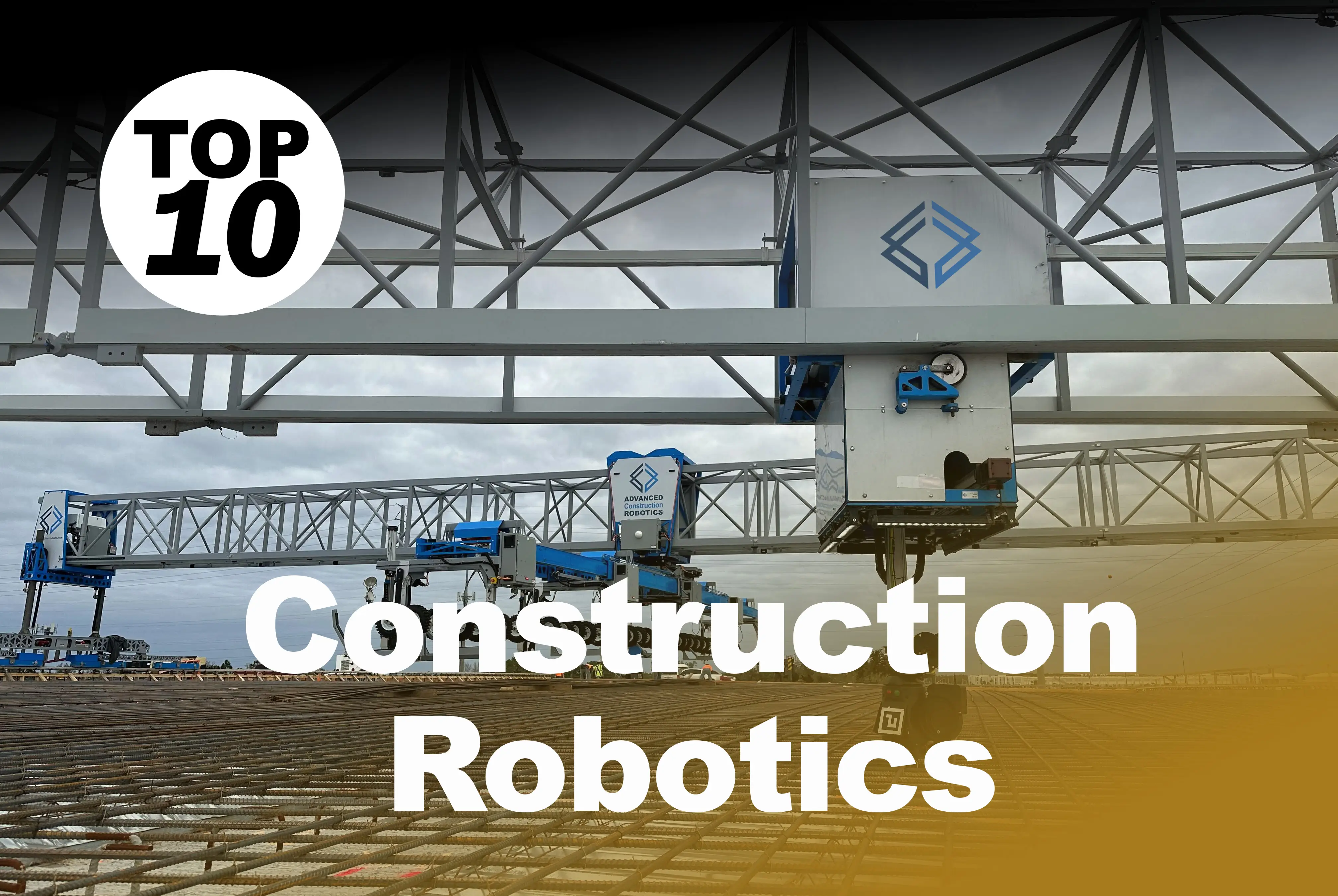
As construction automation continues to reshape the industry, TyBOT® and IronBOT® have been recognized by Construction Digital as two of the leading robotic solutions driving that transformation. Featured in the publication's 2026 Top 10 Construction Robotics ranking, the robots were highlighted for improving productivity, enhancing worker safety, and helping bridge the skilled labor gap on infrastructure projects.
Read the full article here: https://constructiondigital.com/top10/top-10-construction-robotics.

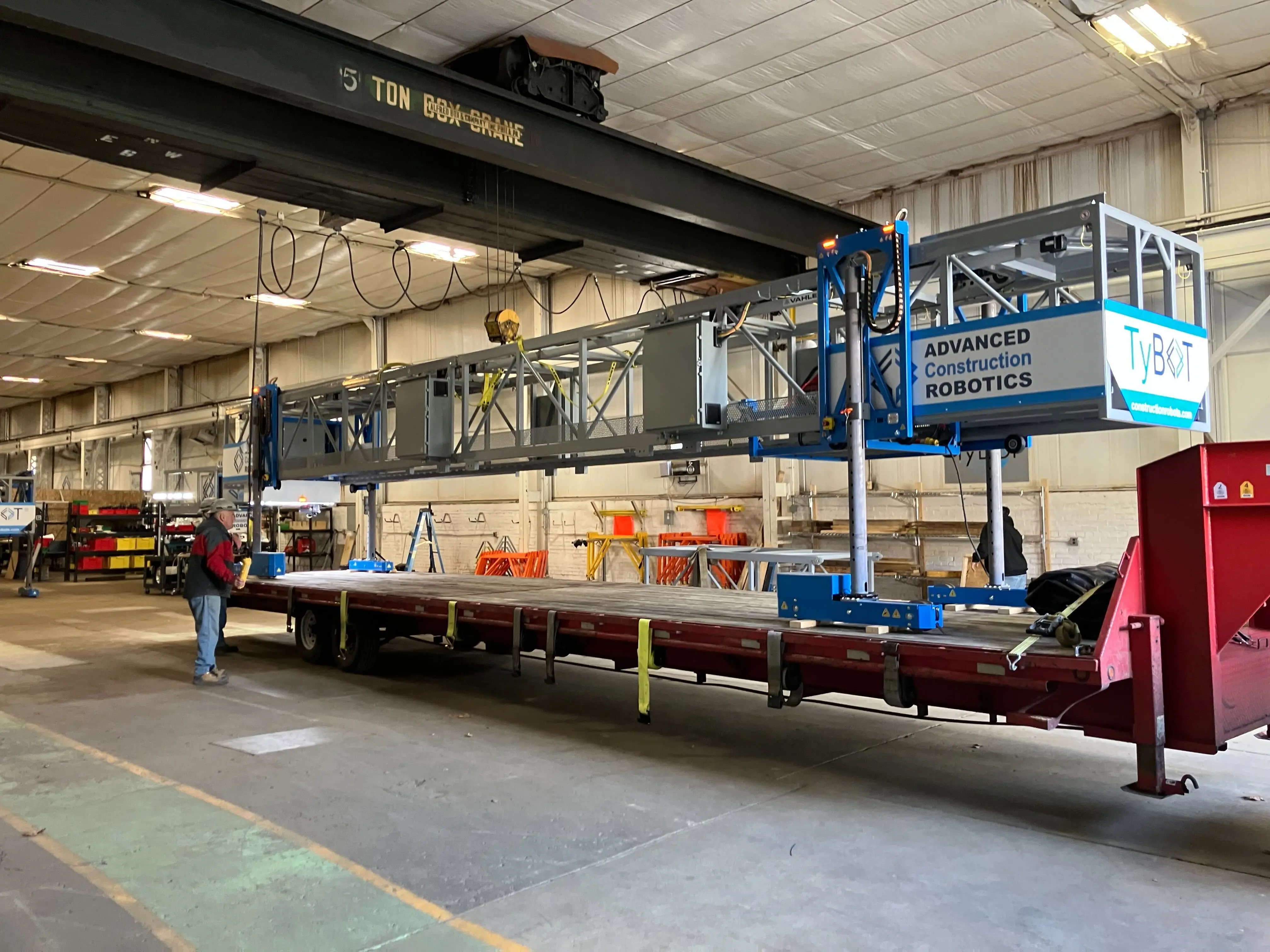
Advanced Construction Robotics (ACR), the leader in construction robotics innovation, is proud to announce it will deliver one of two TyBOT® units to D.T. Read Steel Co., Inc. (D.T. Read) in early December. TyBOT is deployed on the I-26/I-95 Interchange Improvement Project in Harleyville, South Carolina, supporting D.T. Read’s ongoing efforts to enhance productivity, safety, and efficiency on high-volume rebar installation projects. D.T. Read’s second TyBOT will be delivered by the end of 2025.
D.T. Read’s investment follows extensive hands-on experience using TyBOT across several major infrastructure projects, including the NASA Causeway Bridge Replacement in Titusville, Florida. On that project, TyBOT completed 139,261 ties, performing 50% of both the top and bottom mats on a significant portion of the 171,733-square-foot deck. Additionally, the jobsite required debris-free work areas, making cleanliness a top priority. TyBOT helped D.T. Read meet these requirements by significantly reducing tie-wire waste, eliminating the need for extensive cleanup. As a result, the company saved 1-2 full days that would have otherwise been spent clearing debris from traditional rebar tying methods.
By expanding their use of TyBOT, D.T. Read continues its legacy of partnering with ACR, bringing innovation to the field and elevating expectations for performance in the rebar installation industry.
“D.T. Read has consistently demonstrated strong leadership in adopting technologies that improve performance on the jobsite,” said Stephen Muck, Founder & CEO of Advanced Construction Robotics. “Their experience with TyBOT has shown the real-world value of automation, and we’re excited to continue supporting their team as they integrate robotics to boost productivity, enhance safety, and strengthen their competitive profitability edge.”
By adding TyBOT to its operations, D.T. Read continues to advance its longstanding commitment to innovation and operational excellence. Their adoption of robotic solutions represents a growing industry movement toward integrating automation as a standard tool for delivering safer, faster, and higher-quality results.
“Our team has seen how TyBOT can transform the way we work—improving speed, consistency, and safety on demanding projects,” said Chris Lewis, Vice President of D.T. Read Steel Co., Inc. “Adding these units allows us to expand our capacity and give our crews another tool of the trade that helps them perform their best. We are eagerly anticipating the release of ACR’s next commercial robot, IronBOT®, and we are confident it will further enhance our productivity and streamline our operations.”
As more contractors recognize the value of robotics, ACR remains committed to advancing construction automation with jobsite-ready technology that strengthens project delivery across the nation.
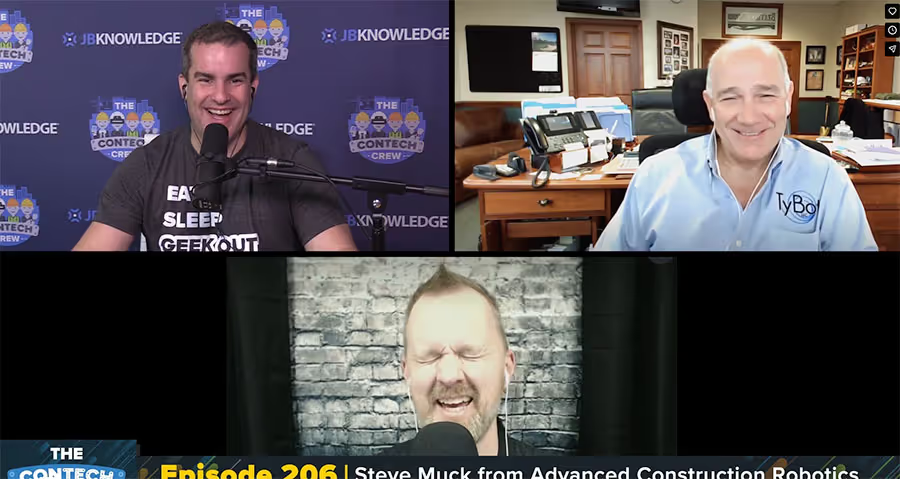
TyBot shines again as Steve Muck’s interview earns the most listens of 2020 for JBKnowledge's The ConTechCrew podcast. The interest in cutting edge construction tech continues to grow every year, and we are excited to be a part of it.
Watch the full episode below:
TyBot shines again as Steve Muck’s interview earns the most listens of 2020 for JBKnowledge's The ConTechCrew podcast. The interest in cutting edge construction tech continues to grow every year, and we are excited to be a part of it.
Watch the full episode below:

TyBot once again captured the eyes of the industry by earning one of ConstructionJunkie’s top 10 most read articles of 2020. It's safety benefits and productivity enhancement have become hard to ignore in the industry. Read what Shane Hedmond from Construction Junkie had to say below:
" Last week, I spent some time out in Las Vegas to attend the World of Concrete 2020, which is an immersive experience for all things concrete and masonry related. While there, I was able to catch up with the team from Advanced Construction Robotics, the makers of TyBot, the autonomous rebar tying robot.The TyBot uses a series of cameras and artificial intelligence to identify the intersections of rebar, so no operator or pre-programming is necessary. Once the machine is setup on the screed rails, it can tie up to 1,000 ties per hour. With its typical uses being in bridge work and manufacturing facilities, the width of the TyBot can expand anywhere from 9 feet to 100 feetAlthough TyBot is pretty hefty, weighing in at a maximum of 8,100 pounds, it can be transported on a 40 foot trailer with the equivalent of a Ford F250. The robot is powered by a Cummings Onan QG 5500 EFI generator with a fuel consumption rate between 0.35 gallons per hour to 0.95 gallons per hour, based upon the size of the load.
There’s no doubt that tying rebar is difficult and repetitive work for rodbusters, which makes it a prime target for robotics in the field. The hand tying process can not only cause carpel tunnel syndrome, but chronic back problems from bending and reaching for several hours a day. TyBot claims a substantial increase in productivity and a decrease in schedule with use of the robot, considering that it can work continuously and in difficult weather, such as extreme heat and heavy rains."
Read the full article and watch the video HERE.
See the full list of rankings HERE:
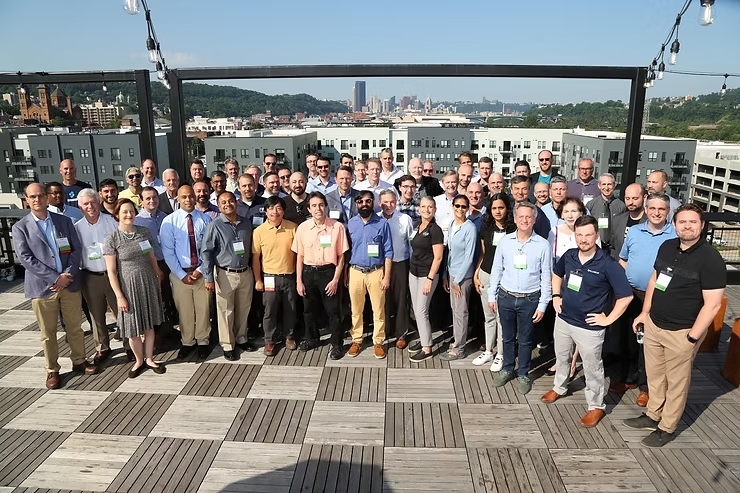
On June 29th, the Pittsburgh Robotics Network (PRN), a group of innovators dedicated to growing the region's robotics and artificial intelligence community, came together to declare Pittsburgh the “Robotics Capital of the World.”
Members of the group, known both nationally and worldwide for their contributions to transforming the world through robotics, included many Carnegie Mellon graduates like Advanced Construction Robotics’ co-founder Jeremy Searock and newly appointed CEO Danielle Proctor.
Jeremy said, "I've enjoyed watching the organization and its members grow, many of whom are longtime friends, former classmates, and colleagues.”
ACR Co-founder Stephen Muck said, "It's an amazing opportunity to come together and highlight the incredible talent pool that's growing in our own backyard. I am proud ACR is a Founding Member of the PRN and excited about the future we are making together to bring the next industrial revolution to reality.”
On June 29th, the Pittsburgh Robotics Network (PRN), a group of innovators dedicated to growing the region's robotics and artificial intelligence community, came together to declare Pittsburgh the “Robotics Capital of the World.”
Members of the group, known both nationally and worldwide for their contributions to transforming the world through robotics, included many Carnegie Mellon graduates like Advanced Construction Robotics’ co-founder Jeremy Searock and newly appointed CEO Danielle Proctor.
Jeremy said, "I've enjoyed watching the organization and its members grow, many of whom are longtime friends, former classmates, and colleagues.”
ACR Co-founder Stephen Muck said, "It's an amazing opportunity to come together and highlight the incredible talent pool that's growing in our own backyard. I am proud ACR is a Founding Member of the PRN and excited about the future we are making together to bring the next industrial revolution to reality.”
On May 21st, Florida’s Turnpike Enterprise (FTE) opened three new ramps at the heavily traveled Central Florida GreeneWay/SR 417 Interchange in Orlando, FL. TyBot Integration Partner, Shelby Erectors, utilized TyBot to help meet schedule goals while delivering increased safety, savings, and productivity to the project. Thank you to Shelby Erectors, Florida's Turnpike Enterprise, and the Florida Department of Transportation.
On May 21st, Florida’s Turnpike Enterprise (FTE) opened three new ramps at the heavily traveled Central Florida GreeneWay/SR 417 Interchange in Orlando, FL. TyBot Integration Partner, Shelby Erectors, utilized TyBot to help meet schedule goals while delivering increased safety, savings, and productivity to the project. Thank you to Shelby Erectors, Florida's Turnpike Enterprise, and the Florida Department of Transportation.
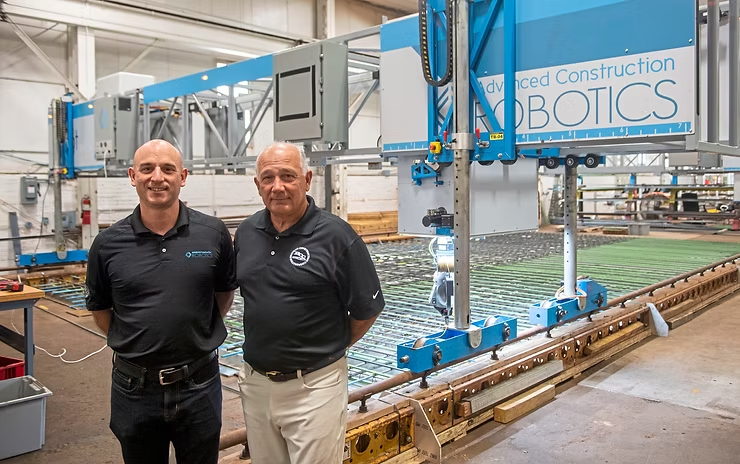
Advanced Construction Robotics hosted a tour of their facilities for the Pittsburgh Post-Gazette (PPG) last week. PPG members met with Co-Founders Jeremy Searock and Stephen Muck to discuss how TyBot and IronBot are being integrated into today’s job sites. During the interview, Steve and Jeremy discussed the rapidly growing demand on local and national construction labor markets and how there are simply not enough workers available to fill the needed construction crews. Discussions were also held on the impact that construction robotics can have on real-world projects and how contractors that are currently utilizing TyBot and IronBot have not only been able to fill in their labor gaps but also achieve higher levels of productivity. To read the entirety of what Steve and Jeremy had to say check out the full article here:
Navigate to the Pittsburgh Post-Gazette website HERE.
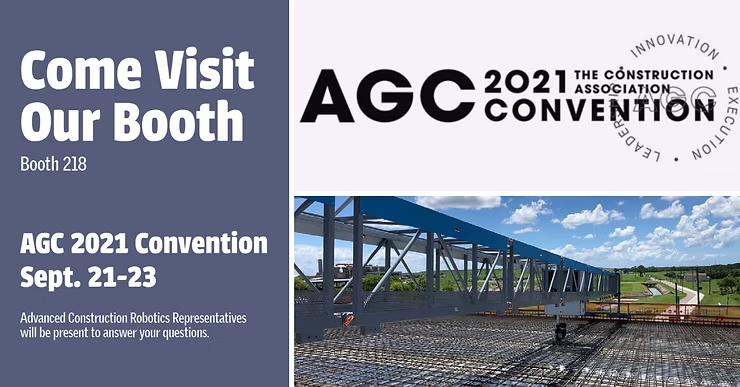
Advanced Construction Robotics is officially a proud member of The Associated General Contractors of America (AGC) through regional chapter, The Constructors Association of Western Pennsylvania (CAWP). AGC is an organization of over 27,000 qualified construction contractors and industry related companies dedicated to skill, integrity and responsibility. Operating in partnership with its Chapters, the Association provides a full range of services satisfying the needs and concerns of its members, thereby improving the quality of construction and protecting the public interest.
Come and see us at Booth 218
AGC 2021 Annual Convention
Equipment, Technology and Construction Solutions Expo
in Orlando, FL
September 21-23, 2021
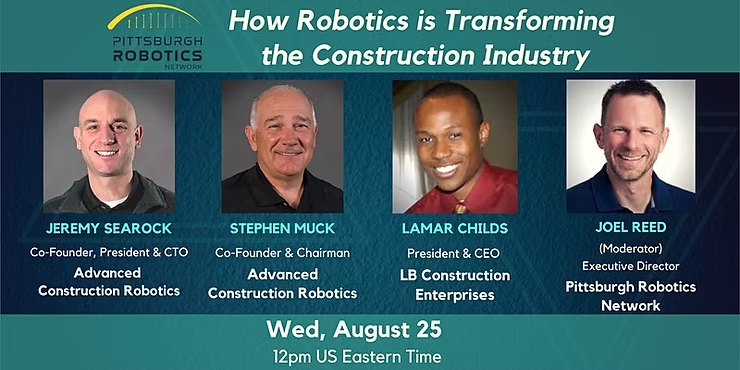
ACR Co-Founders Stephen Muck and Jeremy Searock, along with LB Construction Enterprises president LaMar Childs, joined the Pittsburgh Robotics Network to discuss the exciting transformation robotics is bringing to construction. Childs provided unique industry insight as a real-world user of ACR’s TyBot.
You can watch the discussion below:
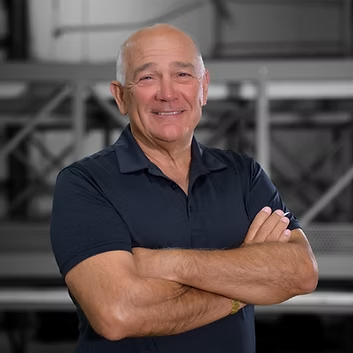
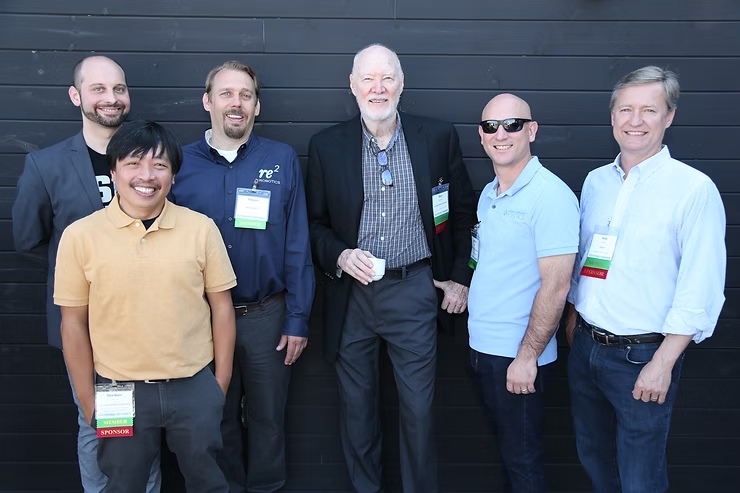
The Pittsburgh Robotics Network welcomes the addition of Stephen M. Muck, the Co-Founder & Executive Chairman of Advanced Construction Robotics, to the organization’s Board of Directors.
Muck, who also serves as chairman and CEO of Brayman Construction Corp. and a general partner at Grouse Ridge Capital, founded Advanced Construction Robotics (ACR) in 2016 alongside Jeremy Searock, formerly of Carnegie Mellon University’s National Robotics Engineering Center (NREC). ACR develops innovative robotics and artificial intelligence systems with the goal of enhancing productivity and improving safety at construction sites. Their first product was the autonomous rebar tying robot TyBOT, and they are currently in the late stages of development on the rebar placing robot IronBOT. The company is based in Pittsburgh, which is recognized as the Robotics Capital of the World.
The number of PRN directors grows to 19 with the addition of Muck, who adds his breadth of business and economic development expertise to a board already consisting of a broad set of stakeholders and leaders from industry, nonprofit and academia.
While the Pittsburgh Robotics Network is headquartered in Western Pennsylvania, the impact of the organization, as well as the influence of it’s Board, is felt beyond state lines and within the national and international robotics and machine learning communities. Among the distinguished stakeholders with seats on the PRN Board are representatives of autonomous vehicle pioneers Argo AI and Aurora; world-renowned research institutions such as Carnegie Mellon’s School of Computer Science and the University of Pittsburgh’s School of Computing and Information; robotics leaders such as KAARTA, RE2 and Seegrid; industry leaders such as Dentons and J.P. Morgan; and nationally leading seed-stage investor Innovation Works.
Led by veteran robotics industry executive Joel Reed, the PRN is a non-profit organization formed by regional industry leaders for the purpose of cluster creation and promotion to develop a network of highly engaged stakeholders that fosters business growth and jobs for a diverse pool of talent. The Pittsburgh Robotics Network’s board is committed to fulfilling the PRN vision of making the Pittsburgh robotics ecosystem the largest and most advanced in the world, and it currently features:
Kevin Dowling, CEO, Kaarta (President)
Jorgen Pedersen, Founder and CEO, RE2 (Secretary)
Parag Batavia, Founder, Neya Systems (Treasurer)
Marcel Bergerman, COO, Near Earth Autonomy
Matt Blackburn, Senior Manager, Government Relations, Aurora
Bruce Childers, Interim Dean, School of Computing and Information, University of Pittsburgh
Howie Choset, CMU & Co-Founder, HEBI Robotics
Mike Embrescia, Chief Development Officer, Carnegie Robotics
Martial Hebert, Dean, CMU School of Computer Science
David Kalson, National Group Leader, Dentons Venture Technology and Emerging Growth Companies Group
Zack Katic, Director of Strategic Talent, Argo AI
Afshan Khan, Portfolio Executive, Innovation Works
Justin Krauss, Executive Director, Technology & Disruptive Commerce, J.P. Morgan Commercial Banking
Louisa Michaels, Chief Financial Officer, The ARM Institute
Aaron Morris, Founder and CEO, Allvision
Stephen M. Muck, Co-Founder & Executive Chairman, Advanced Construction Robotics
Joel Reed, Executive Director, Pittsburgh Robotics Network
Jim Rock, CEO, Seegrid
Patti Rote, Program Manager, Robotics Institute; CMU & Co-Founder, Girls of Steel
Article courtesy of the Pittsburgh Robotics Network

TyBOT’s cameras map out the rebar grid work area ahead and identify the intersections that need to be tied. The Tram independently positions the Tie Module over the next intersection, allowing the module to complete its assigned tie while TyBOT keeps track of the intersections it has completed. This cycle of mapping, positioning, tying and tracking efficiently continues until the entire work area has been completed and TyBOT notifies its Robot Supervisor before moving forward to continue operations.
TyBOT does all of this without Pre-Mapping, Pre-Programming or BIM Input.
It is just that simple! While TyBOT handles the backbreaking, repetitive task of bulk-tying your project’s rebar grid, your crew is free to move on to the project’s next critical path item.
Would you like to see TyBOT at your office or Jobsite? Schedule your Demo HERE.
2022 TyBOT Roadshow Schedule:
- Jan/Feb 2022: Nevada, Arizona, New Mexico, Texas, Oklahoma, Louisiana, Mississippi, Alabama, Georgia, North Carolina & South Carolina
- Spring 2022: Kentucky, Tennessee, Ohio, Virginia, West Virginia & Maryland
- Summer 2022: Illinois, Michigan, Wisconsin, Indiana, Minnesota & Iowa
If you are not located in one of the states that our team is currently scheduled to visit, we can arrange a fully interactive Virtual Demonstration from our Indoor Bridge Deck in Pittsburgh, PA and broadcast conveniently to you wherever you may be located.
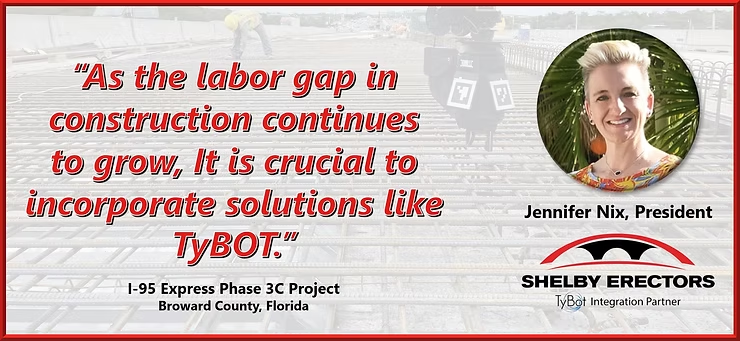
Pittsburgh, Pennsylvania: The Construction industry has burst into a flurry of activity as the most aggressive infrastructure spending initiative since the 1950s was signed into law on Monday. Combined with a skilled labor shortage, the $550 Billion bill calls into question whether contractors have the capacity to meet rapidly growing demand. Innovative contractors across the nation are turning to new technology for help. Robots as a new class of equipment are proving to be an effective complement to human crews and will be essential to completing the projects laid out within the infrastructure bill.
Woman-owned Disadvantaged Business Enterprise Shelby Erectors is an example of the effective usage of robotics on the jobsite to contractors across the country. Contracted for rebar installation on the 512,427 sqft I-95 Express Phase 3C project in Ft. Lauderdale, Florida, Shelby elected to utilize TyBOT by Advanced Construction Robotics to boost crew productivity. TyBOT, a rebar tying robot, leverages cutting edge artificial intelligence to tie together the rebar grid that commonly reinforces concrete surfaces. While TyBOT is actively tying rebar, Shelby’s laborers are free to handle more skilled tasks better suited for human hands.
Shelby stands tall in the industry as an example of how to adapt to modern challenges, and its President, Jennifer Nix, is positioning her company to meet the labor demands of the new infrastructure bill. “TyBot is definitely a lifesaver when labor availability is lacking. It provides a level of consistency that's difficult to match and is why we’re currently using it on 3 separate concrete bridge construction projects across Florida.” Nix says, “TyBot removes the repetitive, back-breaking work that can cause serious long-term injuries, and anything we can do to improve our crews’ health and safety is a huge priority for us. TyBOT allows us to safely stay on schedule while shorthanded and to move our workforce on to higher-skilled tasks or to another jobsite where they can be better utilized.” The I-95 Express Project has become a landmark in the application of new technologies on major infrastructure projects. It is among the first projects in the world to address the labor shortage with cutting-edge robotic technology.
ACR is excited to call Shelby Erectors our integration partner. For many years our co-founders have observed the industry and have watched the labor gap growing. With this new infrastructure initiative, the shortage is accelerating at an alarming rate. Co-Founder Jeremy Searock is seeing his vision for the company become reality, saying “ACR was founded for moments like this. Our robots will continue to solve today’s construction challenges assisting the workforce to meet rapidly growing demand, such as what will be generated from the infrastructure bill.” ACR believes robotics can and will come to the rescue of crews struggling to close the growing labor gap. In order to complete the Billions in new projects, partnerships like those between Shelby and ACR will be absolutely essential.
Nix says “As the labor gap in construction continues to grow with increasing demand, it is crucial to incorporate solutions like TyBot to mitigate the effects. We have found that TyBOT saves at least 25% on our rebar tying schedule. This provides a crucial edge when bidding projects, and project owners, typically DOT, often like to see innovative tech used. We will likely use TyBot on over half of our projects in the next 5 years.” The effectiveness of jobsite robotics on this project will be sure to be noticed as contractors scramble to address the flood of new infrastructure initiatives coming from Capitol Hill. The lesson is clear, useful robots are no longer science fiction. They are here and ready to do work today.
-------------------------------------------------------------------------------------------------
A world-leading innovator of autonomous robotic equipment, Advanced Construction Robotics is transforming the construction industry by filling the skilled labor gap and increasing overall productivity. Our robots give construction firms the ability to meet a rapidly growing demand, improve safety, and reduces scheduling risks. TyBOT, ACR’s first product, is a rebar tying robot that self-navigates, self-ties, and does not require programming or build plan input from the working crew. TyBot’s partner, IronBot, will lift, carry, and install rebar when it comes to market in 2022.
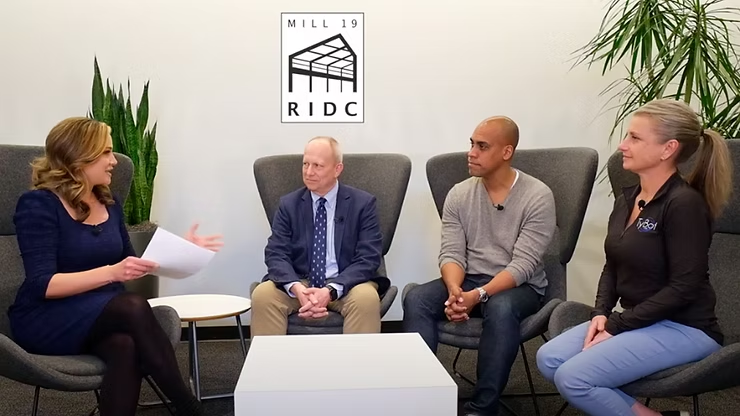
Our CEO, Danielle Proctor, had a discussion last week with Regional Industrial Development Corporation’s, President Don Smith and Matthew Johnson-Roberson, director of Carnegie Mellon University’s Robotics Institute about Pittsburgh’s autonomous ‘renaissance’. Read the article and watch the video below to learn more about transitions from R&D to commercialization and manufacturing, creating jobs and other future growth opportunities.
Our CEO, Danielle Proctor, had a discussion last week with Regional Industrial Development Corporation’s, President Don Smith and Matthew Johnson-Roberson, director of Carnegie Mellon University’s Robotics Institute about Pittsburgh’s autonomous ‘renaissance’. Read the article and watch the video below to learn more about transitions from R&D to commercialization and manufacturing, creating jobs and other future growth opportunities.

Co-founders Jeremy Searock and Stephen Muck penned a letter to President Biden upon his visit to Pittsburgh to promote the Build Back Better Bill. Their message was clear. Construction has a labor shortage problem and robotic solutions can fill the gap to rebuild America’s infrastructure in a timely fashion.
Mr. President, Pittsburgh is the most important stop on your road trip to discuss the infrastructure bill.
That’s because without the work being done in Pittsburgh, the Build Back Better bill is still a dream. Construction simply does not have enough workers.
Our country is in the midst of a nationwide labor shortage. This is something the construction industry knows all too well. For several decades, the industry has faced a skilled labor shortage, one that is now approaching a crisis level. Some experts believe the U.S. needs more than 1 million construction workers just to handle work under development.
Now that the country plans to address its crumbling infrastructure, we need more than votes and workers — We need a “constructional revolution.” A revolution only made possible through the teaming of robotics and AI with skilled construction labor.
Luckily, that’s what’s happening here in Pittsburgh. We are proud to lead Advanced Construction Robotics, one of the many robotics companies in our region. This industry is pioneering solutions that will allow us to not only rebuild our infrastructure but also build a new economic sector.
Robotic solutions are not here to replace workers. They are here to fill the labor gap and provide safety, consistency, increased productivity, and build quicker. The trade unions agree. The younger generations love the idea of supervising a robot on the job site.
Robotics and AI can solve real world challenges like our labor shortage and infrastructure.
Mr. President, let’s get to work.
Mr. Searock and Mr. Muck's letter was included in the Pittsburgh Post Gazette Here.
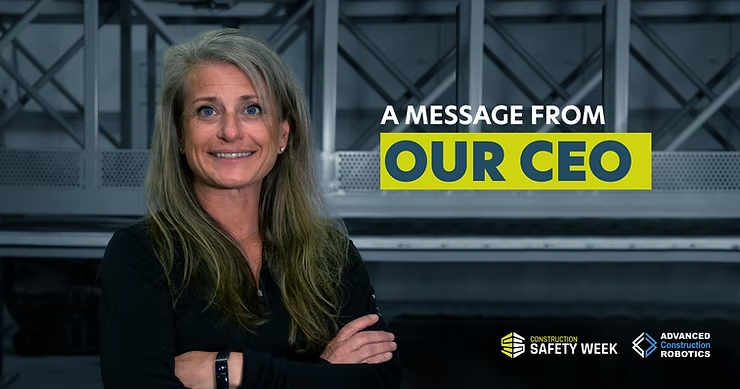
Hello everyone I am Danielle Proctor, CEO of Advanced Construction Robotics here to close out safety week by renewing our commitment as a company to improve safety on jobsites through technology. As we reflect on the past week and all of the amazing safety initiatives across the construction industry we are inspired to continue to innovate for the sake of worker health. We believe that human laborers on the job site are a contractor's most valuable asset, and as such, every measure should be taken to protect them. There is no greater method of improving safety than to remove workers from dangerous situations entirely. We at ACR encourage all contractors to take a look at the automation of dangerous and injury-prone tasks in order to keep their crews safer.
Of course, automation is not the only modern method of safety improvement. New technologies are emerging every day for improving safety on the jobsite, whether it be through wearables, software, or more. The robotics renaissance we are currently experiencing will lead to leaps forward in safety. We encourage anyone in construction and beyond to open their minds to modern safety solutions. We want to say thank you to all of the safety professionals out there today working to keep crews safe and healthy. Your work is invaluable not just during safety week, but every week. Stay safe out there everyone, and remember to keep innovating infrastructure.
Advanced Construction Robotics is a leading innovator of autonomous robotic construction equipment. The organization is built on four pillars, improving safety, enhancing productivity, increasing consistency, and reducing schedule risks. Every day the ACR team strives to bring these benefits to real contractors on real job sites. Learn more about ACRs pillars here.

Spartan Reinforcing Debuts Autonomous Robot for First Time in Texas
TyBOT®, the Autonomous Rebar Tying Robot, Completes First Texas Job on the SH302 Highway Project.
Winkler County, Texas – On its first deployment in the Lone Star State, TyBOT® by Advanced Construction Robotics (ACR) recently completed bulk rebar tying operations on the SH302 highway project in Winkler County, Texas. Winner of numerous innovation awards, TyBOT is an autonomous rebar tying robot that utilizes artificial intelligence to see, think, and act to self-adapt to unique jobsite designs. It represents the latest class of construction equipment that works alongside existing crews to ensure project timelines are safely met. Completing 101,564 ties across 69,200 square feet of bridge deck, TyBOT was essential in assisting Spartan Reinforcing, a Texas-based Disadvantaged Business Enterprise specializing in turnkey solutions for reinforced concrete, as well as Kiewit, the nation’s 4th largest general contractor.
Travelers watching the progress of the SH302 highway project in Winkler County Texas will be happy to see that the contractors on the job are deploying the latest technology to get the job done faster. Robots on the jobsite optimize the work of the crew members by allowing them to avoid boring repetitive tasks and focus on more complex work better suited for traditional labor. Augmenting the workforce in this way not only accelerates schedules but also helps to keep the crew safe from injury-prone tasks. With this project, Winkler County became one of the first regions to deploy modern solutions in construction which traditionally has avoided high tech.
“TyBOT augmented our crews and helped make our team more efficient. We were excited by the advantages robotic construction equipment offered us and it opened our minds to the great potential in adopting new technologies.” – Craig Wallace -CEO, Spartan Reinforcing
“I was apprehensive about using TyBOT at first, but as the project progressed I discovered it made my crew work smarter not harder.” – Samuel Lopez-Spartan General Foreman
“ACR was founded to rapidly bring robots to jobsites to help crews like Spartan and Kiewit. Our robots will continue to solve today’s construction challenges assisting the workforce to meet rapidly growing demand” – Jeremy Searock, Co-Founder, Advanced Construction Robotics
###
ABOUT ADVANCED CONSTRUCTION ROBOTICS
A leading provider of robotic equipment, ACR is transforming the construction industry by filling the skilled labor gap and increasing overall productivity. Our robots give construction firms the ability to consistently meet growing demand, reduce scheduling risks and improve safety. TyBOT®, ACR’s first product, is a rebar tying robot that self-navigates, self-ties, and does not require programming or BIM plan input from the working crew. TyBOT’s partner, IronBOT, will lift, carry, and install rebar when it comes to market in 2022.
PRESS CONTACT:
Name: Bryce Nelson
Phone: 412-756-3360 x50478
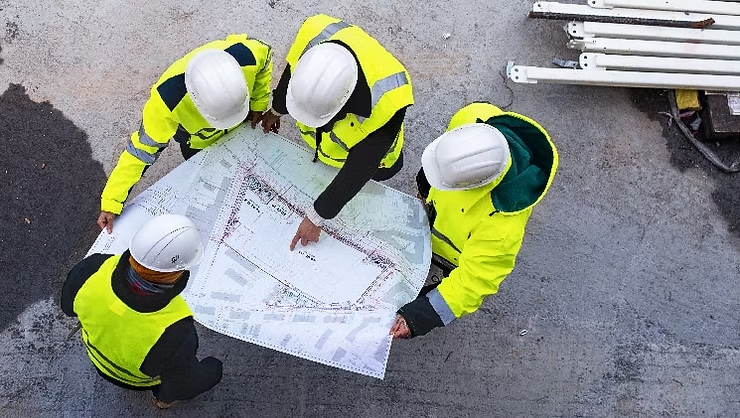
Stephen Muck our Co-Founder and Executive Chairman was recently featured on Liberty Mutual Insurance Construction Risk Round Table. Join us as we talk about how contractors are getting more done with less and saving money by using TyBOT® by Advanced Construction Robotics. Listen in to Episode 3 of the podcast below:
https://business.libertymutual.com/insights/construction-risk-roundtable/?extcmp=SUR_CN_tl_US_LINK

Steve Pawlett of Ontario Construction News recently covered the topic of Robotics in Construction featuring Advanced Construction Robotics Co-Founder, President & CTO Jeremy Searock. During the interview Searock covered labor shortages and how the industry must adapt to overcome current challenges. With productivity declining, there is opportunity for significant gains in the space. During his interview Searock outlined how ACR plans to aid the industry as the 4th industrial revolution continues to develop.
“Our mission is to bring robots or artificial intelligence to the construction industry. We want to do that because the industry is short on labour, and there is a huge demand for infrastructure builds. The demand continues to grow,” explains Jeremy Searock, co-founder, president, and CTO at Advanced Construction Robotics. “We want to fill that labour gap with robots to ensure the world’s infrastructure can be completed when they want it complete.”
-Jeremy Searock, Co-Founder, Advanced Construction Robotics
Read the full article here: https://www.ontarioconstructionnews.com/robotics-improving-construction-productivity/
About the Record:
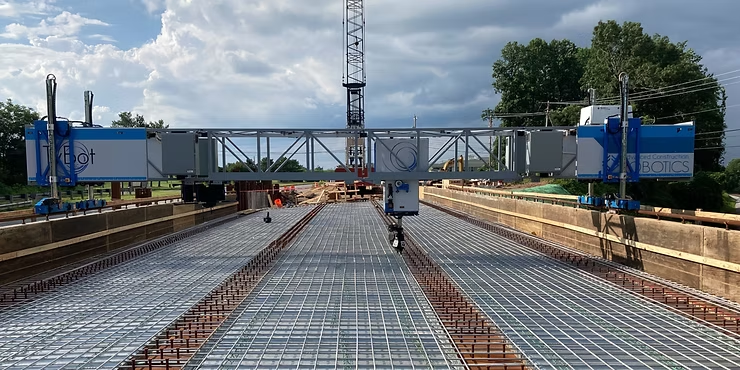
August 30th, Pittsburgh PA: TyBOT by Advanced Construction Robotics set its all-time tie record on the Rt. 29 Ward Road bridge project in Lynchburg, Virginia on July 13th, 2022. Over the course of one shift, TyBOT completed 17,155 ties alongside D.T. Read Steel Co. Inc. and English Construction. This record came soon after TyBOT's yearly record, where it completed 11,000 ties in a single shift on The Gateway Expressway project in Florida. This all-time record overcomes the previous record of 16,000 ties in a single shift set in February of 2021. TyBOT shift lengths vary by project. At an active tie-rate of 1,149 ties/hour, TyBOT outworked its standard production estimates of up to 1,100 ties/hour.
“Production at this level is impressive. TyBOT was a great asset to our crew and we are excited to see it making a real difference on our projects.”
– Donnie Read, President, D.T. Read Steel Co. Inc.
About the Project:
TyBOT completed operations on the 12,343 sq. ft. bridge deck in just 5 days, freeing up time and energy for the crew of D.T. Read to complete work elsewhere on the project. Total TyBOT ties equaled 37,942 and average tie rate was 1,106 ties/hour. The bridge was part of the Route 29/460 Bridges over Norfolk Southern Railroad project valued at $16.9 Million.
About TyBOT:
TyBOT®, ACR’s first product, is a rebar tying robot that self-navigates, self-ties, and does not require programming or BIM plan input from the working crew. TyBOT utilizes artificial intelligence to see, think, and act to self-adapt to unique jobsite designs. It represents the latest class of construction equipment that works alongside existing crews to ensure project timelines are safely met.
“We are thrilled to see TyBOT continuing to best itself in leaps and bounds. Innovating an industry is not easy but this tie count makes a real difference. We can’t wait to see what TyBOT accomplishes next”
– Jeremy Searock, Co-Founder, President & CTO Advanced Construction Robotics
###
About Advanced Construction Robotics, Inc.:
A leading provider of robotic equipment, ACR is transforming the construction industry by filling the skilled labor gap and increasing overall productivity. Our robots give construction firms the ability to consistently meet growing demand, reduce scheduling risks and improve safety. TyBOT’s partner, IronBOT, will lift, carry, and install rebar when it comes to market in 2022.

On Nov. 15th ACR's Integration Partner, Shelby Erectors, appeared on Mike Rowe's "The Way I Heard It" podcast to discuss the state of construction, leadership, and of course how Shelby is utilizing TyBOT. Shelby COO Jack Nix provided expert insight into how construction operates, what gives construction its character, and what it takes to lead a successful construction business. You can catch their conversation here:
On Nov. 15th ACR's Integration Partner, Shelby Erectors, appeared on Mike Rowe's "The Way I Heard It" podcast to discuss the state of construction, leadership, and of course how Shelby is utilizing TyBOT. Shelby COO Jack Nix provided expert insight into how construction operates, what gives construction its character, and what it takes to lead a successful construction business. You can catch their conversation here:
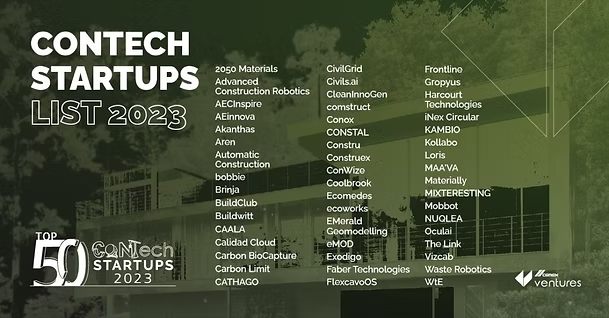
Construction Robot Developer Captures Spot on CEMEX Ventures Top 50 List.
Pittsburgh PA: Advanced Construction Robotics (ACR) was named to the Cemex Ventures ConTech Top 50 Startups List in the “Future of Construction” Category. CEMEX Ventures releases their list of the “Most Promising Startups” that align with their market-driven opportunity areas: Green Construction, Enhanced Productivity, Construction Supply Chain, and Future of Construction. ACR’s inclusion on this list reinforces its position as one of the most exciting and effective startups in the Construction Technology space. Cemex Ventures invests and partners with the most innovative, sustainable, and promising startups to drive the construction industry revolution.
“We are proud to be named to the CEMEX Top 50 Startups list. 2023 is already shaping up to be an exciting year not just for ACR, but for the entire ConTech space. We can't wait to see what this year holds for us, and all of the other innovative companies included with us,” said Danielle Proctor, CEO, Advanced Construction Robotics.
CEMEX Ventures has recognized the impact Advanced Construction Robotics is making in the industry as it continues to do work on real jobsites and bring positive change to the industry. Advanced Construction Robotics currently offers Robotics as a Service for horizontal rebar installation. Its first product, TyBOT, bulk ties rebar at a rate of up to 1,100 ties/hour, has been on nearly 40 real-world projects and has completed over 2.5 million jobsite ties. Its second product, IronBOT, is in the latter stages of development and will lift, carry, and place rebar.
###
About Advanced Construction Robotics, Inc.:
A leading provider of robotic equipment, ACR is transforming the construction industry by filling the skilled labor gap and increasing overall productivity. Our robots give construction firms the ability to consistently meet growing demand, reduce scheduling risks and improve safety. TyBOT’s partner, IronBOT, will lift, carry, and install rebar when it comes to market in 2022.
Check out the full list here: https://www.cemexventures.com/top-50/
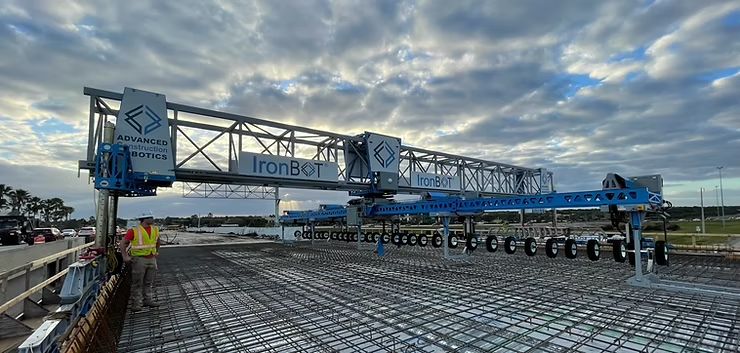
Pittsburgh PA: Advanced Construction Robotics (ACR) is excited to launch its second product, IronBOT®, during ConExpo, the largest gathering of construction professionals in North America, held in Las Vegas, Nevada. IronBOT augments construction crews by lifting, carrying, and placing up to 5,000-pound bundles of rebar in a transverse or longitudinal orientation without the need for heavy lifting from crewmembers. When IronBOT is combined with TyBOT®, our rebar-tying robot, this powerful BOT Bundle can typically provide 50% schedule savings during rebar installation.
“We are confident the combination of TyBOT and IronBOT generates a disruptive technology, meaning the time and cost savings are so significant on a job that it will disrupt the way our industry installs reinforcing steel,” said Stephen Muck, Founder and Executive Chairman of Advanced Construction Robotics.
IronBOT successfully completed its inaugural project in February on the Port St. Lucie West Boulevard Bridge in Port St. Lucie, FL alongside Shelby Erectors. The originally estimated duration of the rebar installation was 14 days. By augmenting Shelby’s crew with the BOT Bundle, the same amount of work was completed in only seven days. During the pilot, IronBOT placed 147,032 LB of rebar while TyBOT completed 58,068 ties over 6.5 production shifts. Shelby Erectors, ACR’s Integration Partner, has already been boosting crew productivity with TyBOT for over two years. "We were excited to be able to have IronBOT and TyBOT work together alongside our crews on this project. We were impressed that we could slash our rebar installation schedule in half. We are actively looking for new projects to incorporate the BOT Bundle in our operations," said Jack Nix, COO of Shelby Erectors, Inc.
"I am so excited to see our initial prediction of cutting schedules by at least 50% come to fruition on IronBOT’s maiden voyage. This was a perfect example of how field teams, working alongside our technology, can form a “modern crew” to unleash disruptive productivity levels," said Danielle Proctor, CEO of Advanced Construction Robotics. "This robotic revolution provides innovative construction firms the ability to become game-changers by adopting and putting their ‘modern crew’ to work.”
ACR is also excited to announce Brayman Construction and Advantage Steel & Construction are currently the only contractors certified to provide the BOT Bundle solution as part of its newly launched Certified Innovator Program. Certified Innovators have dedicated crews that have gone through hands-on training on how to optimize operations alongside the BOT Bundle and incorporate the technology in their installation pricing. " We are excited to work together to show the construction industry how this adoption of robotics at an organizational and cultural level can lead to overall results that are impossible to ignore," said Zach Rosswog, General Manager of Advantage Steel and Construction.
"Technology is changing the way we approach construction. It helps contractors like us cope with shrinking labor forces and growing demand. We become more productive, efficient, and safer when we pair this technology with an innovative mindset," said Tim Taylor, Vice President – Heavy Civil of Brayman Construction Corporation. "That's why we are proud to be the first Certified Innovator and will continue to work with ACR to weave technology into our company identity."
###
About Advanced Construction Robotics, Inc.:
A leading provider of robotic equipment, ACR is transforming the construction industry by filling the skilled labor gap and increasing overall productivity. Our robots give construction firms the ability to consistently meet growing demand, reduce scheduling risks and improve safety.
About Brayman Construction Corporation:
Brayman Construction Corporation is a leading heavy civil and geotechnical contractor with office headquarters in suburban Pittsburgh. Incorporated in 1947, as a family-owned business with a staff of two, Brayman has grown, diversified, and evolved its construction services from a small bridge and concrete company to a large, nationally recognized provider of complex, heavy civil construction projects servicing both public and private sector clients.
The Company has expertise in a wide variety of projects including large-scale complex bridges, deep foundations, marine and dam construction and rehabilitation, complex and heavy steel erection and rehabilitation, and demolition services.
About Advantage Steel and Construction:
Advantage Steel and Construction is recognized throughout the industry for its expertise in diverse steel construction and fabrication capabilities. Our experience includes complex bridge erection, customized temporary support and jacking operations, bridge rehabilitation, building erection, and other unique steel construction applications. We are unique because we embrace challenges our competition tends to avoid.
Since 2001, we have been working with both public and private clients throughout the United States. We hold AISC certifications for Steel Erection and Fabrication for Advanced Steel Bridges with a Fracture Critical Endorsement.
About Shelby Erectors, Inc.:
Shelby Erectors, Inc. has been in business since April 1, 1997. The company is the sole entity of Jennifer Nix, who serves as the Owner and President. We’re a labor subcontractor that specializes in bridge construction – specifically, the installation of reinforcing steel and Stay-In-Place metal decking. Shelby Erectors, Inc. became a Florida Department of Transportation (FDOT) certified Disadvantaged Business Entity (DBE) on August 6, 2010. This distinction is analyzed and renewed annually and must be qualified for in order to maintain its standing. Shelby Erectors currently has over 200 employees that are on job sites across the state of Florida. We maintain contracts that range in length from several months to over six years and vary from thousands of dollars to millions.
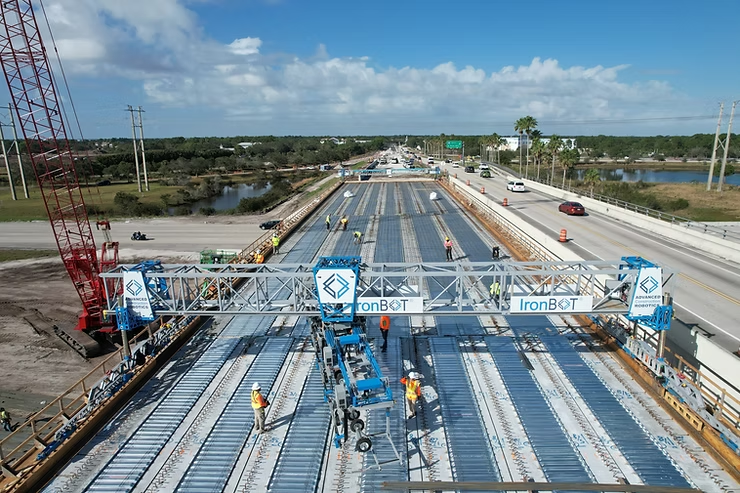
After the exciting release of IronBOT, Bridge Design & Engineering (BDE) featured both IronBOT and TyBOT in their magazine, 'The Smarter Twin.' ACR's Founder and Executive Chairman, Stephen Muck, talked to BDE about the BOTs and ACR's journey from the beginning.
“TyBOT is productive but not, by itself, disruptive. We believe combining TyBOT with IronBOT does generate a disruptive technology, meaning that the cost and time savings are so significant that it will disrupt the way the industry installs reinforcing steel,” says Stephen Muck.
Read the full article in Bridge Design & Engineering’s ‘The Smarter Twin’ (pg. 16-18):

Rebar-tying robots have come to Wisconsin. Waukesha-based MKE Iron Erectors recently used one on a bridge project, a first in the state.
TyBOT performed 17,823 ties in two shifts across a 7,775-sq-ft area on the IH-39 Structure B-11-166 bridge in Columbia County, north of Madison. That’s more than 1,100 ties per hour.
Read the full ENR Article at https://www.enr.com/articles/56551-robot-performs-1-100-rebar-ties-per-hour-on-wisconsin-bridge-job
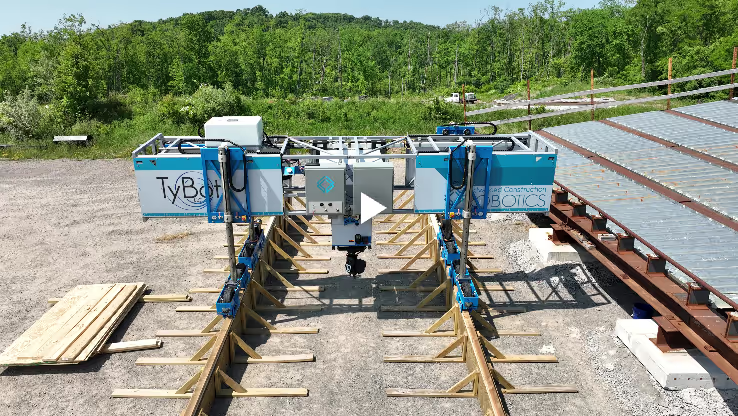
Pittsburgh PA: In response to feedback from the field, Advanced Construction Robotics (ACR) announces a new deployment method for TyBOT, called edge form bogies, a significant enhancement that simplifies and speeds up on-site deployment. This unique design eliminates the need for screed rail, a prerequisite previously required for TyBOT deployment. With TyBOT freed from the screed rail, the solution becomes available to more contractors who previously could not benefit from the tech. "At Advanced Construction Robotics, we believe that true innovation in infrastructure comes from listening to those working with our solutions in the field. Their feedback is invaluable, influencing our product roadmaps and driving us to develop problem-solving solutions that revolutionize construction. Together, we are shaping the future of infrastructure," said ACR Founder and Executive Chairman, Stephen Muck.
TyBOT has traditionally relied on installed screed rail or a porta-rail system that simulates screed rail for successful deployment. This requirement could sometimes be a limiting factor in locations where the screed rail was not readily available. The new bogies ride directly on the timber framing, called edge forms, that is erected on job sites to support concrete pouring. TyBOT's edge form bogies are adjustable, compatible with 2x4" to 2x8" edge form caps, and can handle any existing obstructions such as double-headed nails.
With edge forms always available and in place, TyBOT can work on a wider range of projects, providing contractors with the flexibility and efficiency they need. This new deployment method eliminates the need for pre-installation of screed rail, allowing contractors to maximize their resources and accelerate project timelines.
"By redesigning how TyBOT deploys on construction sites, we've created an opportunity for contractors to conduct deck operations more rapidly and efficiently than ever before," said ACR President and CEO, Danielle Proctor. "We are excited to release edge form bogies because it provides our clients a more flexible and accessible solution, increasing TyBOT's viability for a wider range of projects."
TyBOT’s Edge Form Bogies are available today. Learn more at www.constructionrobots.com/tybot.
###
About Advanced Construction Robotics, Inc.:
A leading provider of robotic equipment, ACR is transforming the construction industry by filling the skilled labor gap and increasing overall productivity. Our robots give construction firms the ability to consistently meet growing demand, reduce scheduling risks and improve safety. TyBOT®, ACR’s first product, is a rebar tying robot that self-navigates, self-ties, and does not require programming or BIM plan input from the working crew. TyBOT’s partner, IronBOT®, lifts, carries, and places rebar. Together, TyBOT and IronBOT are cutting rebar installation schedules in half. If you would like more information, please contact us at info@constructionrobots.com.
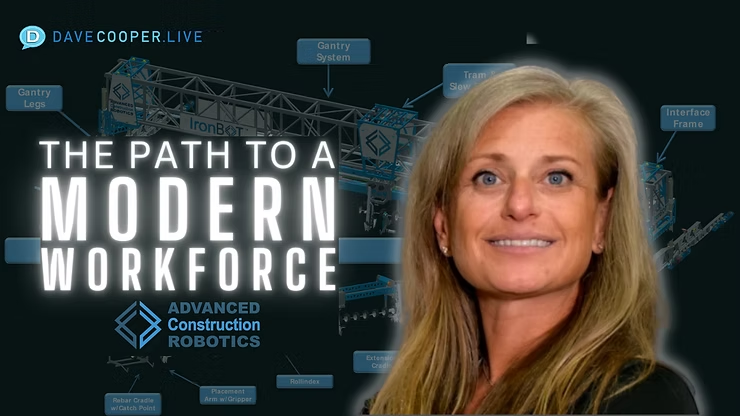
The Dave Cooper Live show featured ACR's President and CEO, Danielle Proctor, on June 19. She sat down with Dave Cooper and showed off TyBOT’s capabilities while discussing everything we do and love. Learn about the 3Cs required to achieve enhanced productivity, increased consistency, improved safety, and reduced schedule risk.
The live stream is available on the Dave Cooper Live YouTube:
https://www.youtube.com/watch?v=X38awv4WFUw
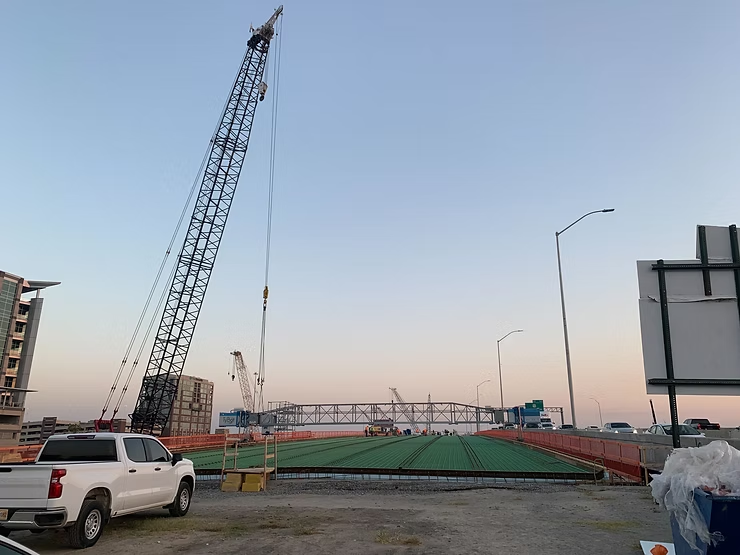
Pittsburgh, PA: Advanced Construction Robotics (ACR) is proud to announce TyBOT's completion of Units 1 and 2 of the I-30 Crossing in Pulaski County in November, marking its debut in Little Rock, Arkansas (AR), with D.T. Read Steel Co. Inc. The I-30 Crossing project was awarded to Kiewit Massman Construction, and it is ARDOT’s (Arkansas Department of Transportation) first-ever Design-Build valued at $632M. This significant undertaking promises to transform transportation through central AR, and the project remains ahead of schedule.
TyBOT not only completed 165,779 ties but also delivered schedule savings across the 1,500FT length of the bridge’s first two units. Such efficiency is a testament to TyBOT's capabilities and a significant stride in redefining construction timelines and methodologies. With over a mile of bridge deck remaining, additional TyBOTs will be deployed to help keep the project moving.
D.T. Read's rapid adoption and successful integration of the autonomous rebar-tying robot, TyBOT, into their workforce demonstrates a commitment to creating a modern construction crew adept in technology and innovation. The use of TyBOT represented a significant step in workforce development, with team members trained to manage and operate the robotic technology in a matter of days.
After training to use the technology himself, Erick Bowman, Area Manager at D.T. Read, expressed his enthusiasm for TyBOT in their operations saying, "TyBOT contributed to a 30% schedule savings and provided a safer working environment for our crew." He is also excited about this technology's prospects for their workforce, stating, "We are looking forward to expanding our team's expertise by training more members to become robot supervisors, or as I like to call them, the Rebar Geek Squad."
D.T. Read's experience and satisfaction with TyBOT's performance in previous projects reinforce its value as an effective tool for large-scale construction and modern crews.
Michael Lewis, Vice President of Operations, at D.T. Read stated, “This technology (TyBOT) and the service that’s offered goes over and beyond anyone’s expectations. Within 24 hours service technicians are on your site ensuring the equipment stays operational.”
“We are excited to deploy on this large project with D.T. Read,” said Danielle Proctor, CEO of ACR. “The rapid adoption of TyBOT into D.T. Read’s crew is a testament to how quickly this tool of the trade can integrate with crews and on projects.”
The I-30 Crossing Project Pulaski County Corridor is currently slated to wrap up in the middle of 2025.
###
About Advanced Construction Robotics, Inc.:
A leading provider of robotic equipment, ACR is transforming the construction industry by filling the skilled labor gap and increasing overall productivity. Our robots give construction firms the ability to consistently meet growing demand, reduce scheduling risks and improve safety. TyBOT®, ACR’s first product, is a rebar tying robot that self-navigates, self-ties, and does not require programming or BIM plan input from the working crew. TyBOT’s partner, IronBOT®, lifts, carries, and places rebar. Together, TyBOT and IronBOT are cutting rebar installation schedules in half. If you would like more information, please contact us at info@constructionrobots.com
About DT Read Steel Co. Inc.:
D.T. Read Steel Co., Inc. specializes in placing reinforcing steel, post tension cable, S-I-P metal decking, bridge shear studs, and erecting concrete/steel bridge girders throughout the Eastern, Southeastern, and South-Central United States. As a Subcontractor, D.T. Read focuses on heavy/Highway projects, commercial projects, industrial projects, and hi-rise building structures. D.T. Read also operates as a General Contractor that currently works on Government Facilities and with local Municipalities. D.T. holds certifications as a DBE Contractor certifying the company with eleven different states Department of Transportation. D.T. Read strives to be the very best at what they do without sacrificing safety, dependability, efficiency, quality, experience, and professionalism.
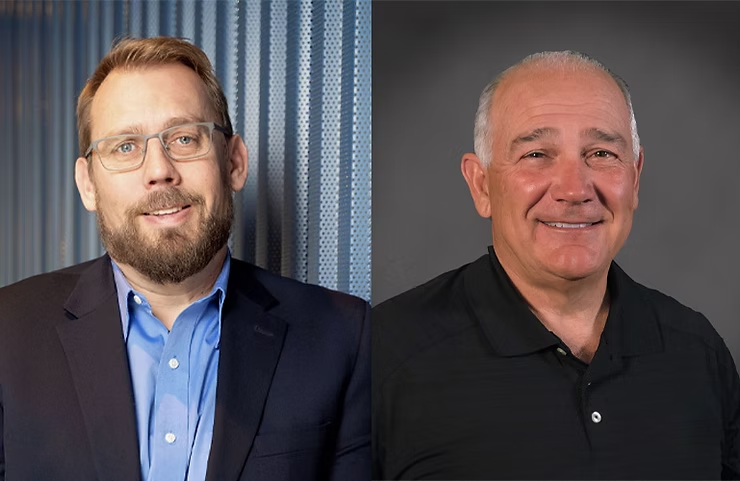
The Pittsburgh Robotics Network, a nonprofit organization dedicated to fostering innovation and growth for the southwest Pennsylvania region’s robotics cluster, yesterday announced changes to its board of directors and executive officers. Jorgen Pedersen has stepped in as the new board president, and Stephen Muck is now secretary.
To read the full article go to https://www.therobotreport.com/pittsburgh-robotics-network-welcomes-new-board-members/

Today, economic development leaders Audrey Russo, President & CEO, and Brian Kennedy, Senior Vice President, Operations and Government Affairs, both from Pittsburgh Technology Council, Rich Fitzgerald, Executive Director of the Southwestern Pennsylvania Commission, and John Myler, Assistant Construction Manager with Pennsylvania Department of Transportation, joined Western Pennsylvania political leaders Senator Lindsey Williams and Representative Robert Mercuri, along with Patrick Joyal, Southwest Region Director, from the Office of Governor Josh Shapiro, met at Advanced Construction Robotics (ACR), to learn more about the cutting-edge robotics technology developed in Pittsburgh, and currently being deployed throughout the United States of America.
"On our tour, we saw literal change in action and how investments in advanced technology create local jobs," said Rich Fitzgerald, Executive Director of the Southwestern Pennsylvania Commission. "We are fortunate to have a thriving robotics industry in our region, and our goal is to support organizations, like Advanced Construction Robotics, as it strives to develop talent and grow its workforce. We want to foster an economic environment in Southwestern Pennsylvania where residents that want to work in the robotics industry have the opportunity to do so."
ACR’s technology addresses labor shortages and infrastructure demands by supplementing labor to reduce infrastructure costs and improve quality while reducing worker injuries. This new technology is exactly what the Governor’s economic development plan targets when discussing new technology impacting infrastructure markets. The ACR Team has developed two robots: TyBOT®, which ties rebar intersections on bridge decks, and IronBOT®, which carries and places rebar—both labor-intense and physically demanding jobs. ACR is actively working with the local Ironworkers Employers Association (IWEA) and the International Ironworkers to train their Ironworkers on using these tools of the trade to enhance productivity and safety on jobsites.
State Representative, Robert Mercuri, commented, “I was very impressed with the innovative technology employed by Advanced Construction Robotics in their rebar applications. This technology can be utilized across the economy in future applications and current projects to accelerate project time completion, build new job categories for Building Trades professionals and support worker safety, and overall productivity. I’m looking forward to seeing their technology support growth across the Commonwealth.”
The company was founded by Stephen Muck, Chairman and CEO of Brayman Construction Corporation, a leading infrastructure contractor, who had a vision five years ago to improve the productivity of the labor force and the quality of infrastructure products while accelerating their delivery while reducing the impact to the traveling public.
Mr. Muck said, “This vision is becoming a reality, and contractors, along with the Ironworkers Union, are using the products to do exactly what we had hoped when we founded ACR.”
Today, the group had the opportunity to watch a physical demonstration of TyBOT at the company’s headquarters in Allison Park, PA, and watched a video of IronBOT placing rebar on a project in Port St. Lucie, FL. Danielle Proctor, President and CEO of ACR, said, “When we combine IronBOT and TyBOT on a job site, the productivity cost and schedule savings are truly disruptive. We are looking forward to working with these agencies on creating future positions, such as the Robot SupervisorTM, and expanding the workforce in robotics outside of traditional engineering roles.”
ACR is actively discussing creating a workforce development program with the Pittsburgh Technology Council, the Pittsburgh Robotics Network, and the Southwestern PA Commission. Mr. Muck is hoping Governor Shapiro’s program will support ACR as they move from product development and the Robots as a Service (RaaS) model to full-scale manufacturing and sales of their products. ACR is currently in discussions with two major corporations interested in accelerating the products to market. Mr. Muck hopes PA will step up in a way that will keep manufacturing these highly technical robotic solutions in Western PA. She stated that she is excited these agencies and forward-thinking political leaders took the time to learn more about ACR and robotic solutions for infrastructure.
###
About Pittsburgh Technology Council: Representing the aggregate voice of more than 1,400 member companies, the Pittsburgh Technology Council employs an experienced government relations team that works to educate individual technology forms about government-related threats and opportunities, while also working to promote a pro-growth public policy agenda on behalf of the entire region’s technology industry.
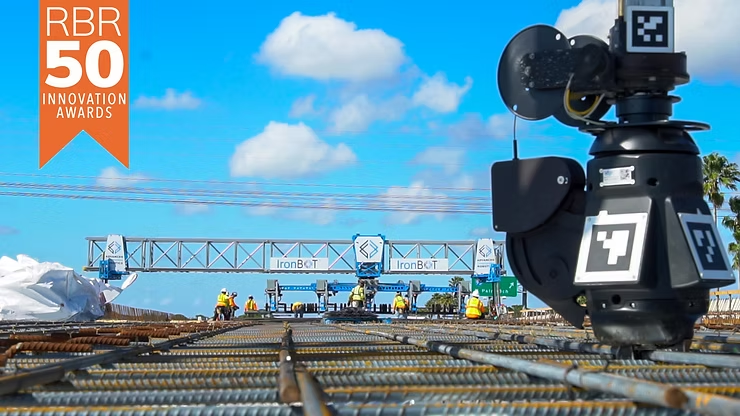
Advanced Construction Robotics (ACR), a leading innovator in construction robotics, is proud to announce that it has been named one of the RBR50 Robotics Innovation Awards recipients for 2024, presented by The Robot Report. This recognition highlights ACR's commitment to innovating infrastructure through robotics, marking a significant milestone in the company's journey towards transforming the construction industry with innovative, automated solutions.
"Receiving the RBR50 Robotics Innovation Award highlights our disruptive solutions to reinforcing rebar installation," said Stephen M. Muck, Founder and Executive Chairman of Advanced Construction Robotics. "This award endorses our technology and its impact on the construction industry to enhance the efficiency, safety, and sustainability of infrastructure projects.”
For over a decade, the RBR50 Robotics Innovation Awards have celebrated the robotics industry's most influential and innovative companies. ACR's inclusion in this list highlights the company's exceptional contributions to the field, especially in developing groundbreaking technologies that address critical challenges in construction.
Steve Crowe, Executive Editor, Robotics, WTWH Media, commented on the awards, stating, "The incredible work of this year's RBR50 winners represents the cutting edge of robotics and raises the bar for the industry. We look forward to celebrating all of the innovators at the inaugural RBR50 Gala (May 1, 2024) during the Robotics Summit & Expo."
ACR's recognition in the RBR50 Robotics Innovation Awards is a testament to its team's hard work, dedication, and creativity. It reflects the company's ongoing efforts to advance the state of robotics in construction and foster a safer, more efficient, and more productive industry.
"We are deeply honored to be a recipient of the RBR50 Robotics Innovation Awards," said Danielle Proctor, President and CEO of Advanced Construction Robotics. “This award reflects our team's relentless pursuit of innovation and excellence. We are committed to pushing the boundaries of what's possible in robotics to enhance the construction industry's capabilities, improve safety, and increase efficiency on project sites worldwide."
ACR is positioned to continue its trajectory of making construction robotics a commercial reality, with plans to expand its offerings further and explore new applications of robotics in construction. This award recognizes ACR's past achievements and inspires future endeavors in robotics innovation.
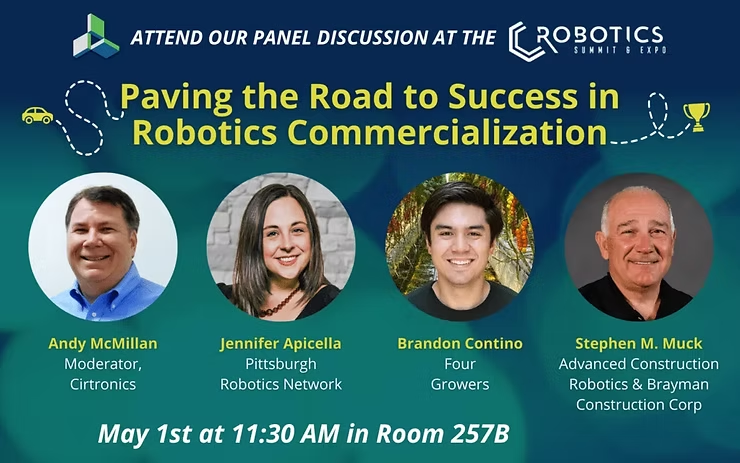
Cirtronics will exhibit and host a dynamic panel on successful robotics commercialization at the Robotics Summit and Expo on May 1st and 2nd at the Boston Convention & Exhibition Center. Attend the Cirtronics-sponsored panel discussion "Paving the Road to Success in Robotics Commercialization" on May 1st at 11:30 am in Room 257B and listen as industry leaders share crucial insights and experiences in overcoming obstacles, scaling operations, and bringing innovative ideas to market successfully.
The panel features leaders Jennifer Apicella, Executive Director of Pittsburgh Robotics Network, Brandon Contino, Co-founder & CEO of Four Growers, and Stephen M. Muck, Founder & Executive Chairman of Advanced Construction Robotics and Chairman & CEO of Brayman Construction Corporation. The panel will be moderated by the Chair of Cirtronics’ Board of Directors, Andy McMillan.
Tom Ferrin, Cirtronics’ CRO, emphasizes, "In the fast-evolving robotics industry, practical
advice rooted in real-world experiences is crucial for achieving commercialization success. Our customers highlight navigating regulatory hurdles, ensuring compliance, and forming partnerships as vital considerations in this rigorous field. That's why we assemble panels with industry experts to share best practices. Our diverse panelists from agriculture, construction, and entrepreneurship backgrounds will reveal their proven pathways to success, offering valuable insights on aligning visions with reality."
Cirtronics invites you to this insightful panel discussion and to visit Booth #206 to discuss your commercialization needs. For more information about Cirtronics, visit their website.
About Cirtronics
Located in the Greater Boston area, Cirtronics specializes in manufacturing complex systems for highly regulated markets such as robotics, medical, security, defense, and industrial. Thriving on exacting standards and attention to detail, Cirtronics delivers tailored services through Precision Engagement®, encompassing manufacturing readiness, strategic sourcing, full-scale manufacturing, testing, and fulfillment of electromechanical or mechanical systems, sub-assemblies, and boards. As an ISO 9001 and 13485 Certified, FDA and ITAR Registered, and employee-owned business, Cirtronics ensures excellence in every aspect of its operations. Learn more at www.cirtronics.com.
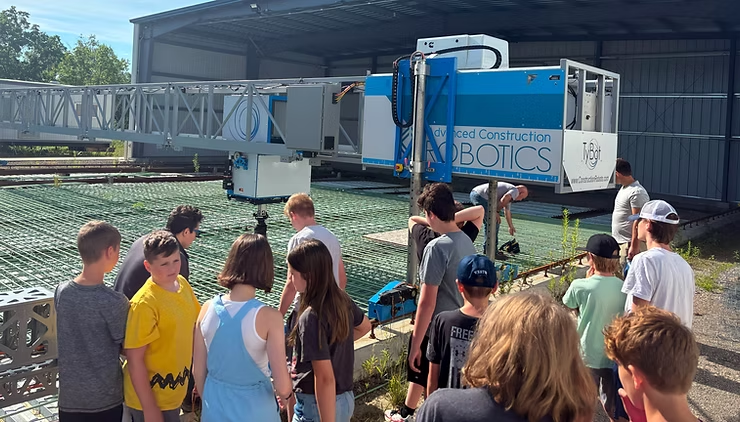
Pittsburgh, PA: Students from the Knoch Middle and High Schools will have the opportunity to participate in hands-on learning with experts in the high-tech “K-STEAM” camps being held this summer in Butler County. Advanced Construction Robotics (ACR) Founder and Executive Chairman Stephen Muck is actively engaging with the community by supporting these camps to help young people learn about the range of opportunities for their futures in STEAM careers across multiple industry sectors.
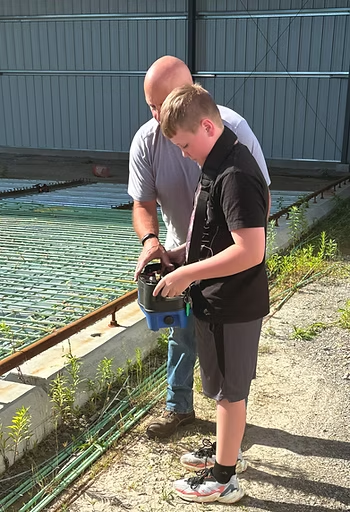
“Cultivating the interest, excitement and aptitude of the next generation of STEAM experts is a critical path to our nation’s future,” Mr. Muck said. “What will our communities look like? The realities of our infrastructure in particular are bounded only by our ability to imagine a future state, and then move it from idea to engineering to implementation.”
Expert Roboticists from ACR will be teaching camp sessions on the intersection between robotics and construction. “We are really looking forward to engaging with these students,” said Danielle Proctor, ACR President & CEO. “We want young people to know that you don’t necessarily have to be in the tech sector to have a high-tech career. Robotic applications are being integrated into many fields that have not typically been thought of as ‘tech’, like construction and agriculture.”
Stephen Muck’s interest in the workforce of the future is shaped by his long history with economic development and heavy civil construction, as well as his business acumen, which led him to create his own specialized robotics company focused on infrastructure, ACR. With his crews working, especially on bridges, he envisioned an opportunity to save not only time and costs, but also—ideally—a key aspect of human health that is a concern in construction: back injuries. By building a robot capable of completing routine and repetitive tasks, like tying rebar, he could reduce worker injuries that result from humans constantly bending over to do the tying, and also from catching their feet in the intricate mazes created by rebar mats. This gave him the opportunity to up-skill workers into other, more complex tasks and, in effect, prolong their careers in construction due to injury reduction.
“My diverse experience has not only afforded me a unique vantage point but has also laid the foundation for the symbiotic relationship between construction needs and robotic innovation,” said Muck. “Our goal at ACR is not just to lead but to inspire a movement towards a more efficient, safe, and sustainable construction industry through robotics. I foresee a paradigm shift in construction, and we must lay the groundwork for a future where robotics and human endeavor converge to redefine the possible. That’s why I am so proud to sponsor this summer’s K-STEAM Camps—I’m investing in tomorrow’s workforce today.”
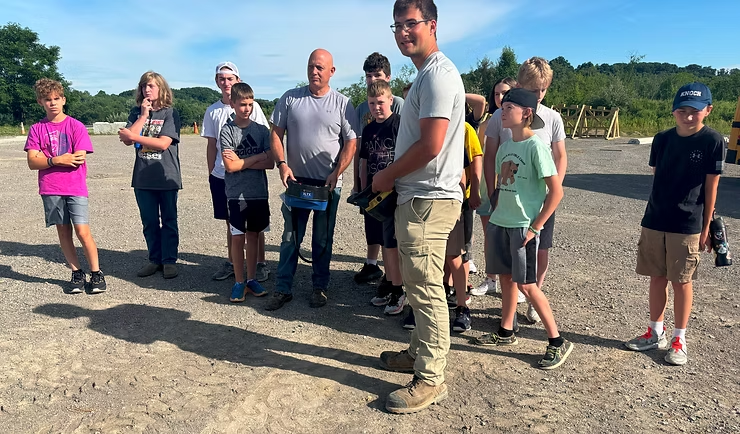
Pittsburgh, PA: Students from the Knoch Middle and High Schools will have the opportunity to participate in hands-on learning with experts in the high-tech “K-STEAM” camps being held this summer in Butler County. Advanced Construction Robotics (ACR) Founder and Executive Chairman Stephen Muck is actively engaging with the community by supporting these camps to help young people learn about the range of opportunities for their futures in STEAM careers across multiple industry sectors.
“Cultivating the interest, excitement and aptitude of the next generation of STEAM experts is a critical path to our nation’s future,” Mr. Muck said. “What will our communities look like? The realities of our infrastructure in particular are bounded only by our ability to imagine a future state, and then move it from idea to engineering to implementation.”
Expert Roboticists from ACR will be teaching camp sessions on the intersection between robotics and construction. “We are really looking forward to engaging with these students,” said Danielle Proctor, ACR President & CEO. “We want young people to know that you don’t necessarily have to be in the tech sector to have a high-tech career. Robotic applications are being integrated into many fields that have not typically been thought of as ‘tech’, like construction and agriculture.”
Stephen Muck’s interest in the workforce of the future is shaped by his long history with economic development and heavy civil construction, as well as his business acumen, which led him to create his own specialized robotics company focused on infrastructure, ACR. With his crews working, especially on bridges, he envisioned an opportunity to save not only time and costs, but also—ideally—a key aspect of human health that is a concern in construction: back injuries. By building a robot capable of completing routine and repetitive tasks, like tying rebar, he could reduce worker injuries that result from humans constantly bending over to do the tying, and also from catching their feet in the intricate mazes created by rebar mats. This gave him the opportunity to up-skill workers into other, more complex tasks and, in effect, prolong their careers in construction due to injury reduction.
“My diverse experience has not only afforded me a unique vantage point but has also laid the foundation for the symbiotic relationship between construction needs and robotic innovation,” said Muck. “Our goal at ACR is not just to lead but to inspire a movement towards a more efficient, safe, and sustainable construction industry through robotics. I foresee a paradigm shift in construction, and we must lay the groundwork for a future where robotics and human endeavor converge to redefine the possible. That’s why I am so proud to sponsor this summer’s K-STEAM Camps—I’m investing in tomorrow’s workforce today.”
Advanced Construction Robotics (ACR), the leader in robotics technology and innovation for the construction industry, is pleased to announce that the third generation of its revolutionary product, TyBOT 3.0, is available for purchase. TyBOT, which previously has only been available through ACR’s Robot as a Service (RaaS) model, can be ordered now for Q1 2025 delivery.
"Our success in the pursuit of automating construction equipment is not just an evolution for ACR; it is a transformative step for the entire construction industry,” said Stephen Muck, Founder and Executive Chairman of ACR. “Offering TyBOT for sale represents our commitment to creating disruptive solutions that will redefine how the world builds, driving unprecedented efficiency, safety, and innovation across a wider range of construction applications."
Sporting a wide array of productivity and reliability enhancements, a TyBOT 3.0 capable of up to 64’ widths starts at $425,500. Fully configured to expand as wide as 117’, it sells for $455,500. The sticker price includes comprehensive training by ACR to ensure customers can confidently mobilize, configure, supervise, and maintain TyBOT from day one. ACR’s Service Platform Subscription gives customers access to a live data portal which provides unprecedented insight into their rebar installation operations as well as continued access to the latest software features from ACR’s world-class engineering team. TyBOT 3.0 also has optional accessories to further expand its cost-saving capabilities, including multiple modes of travel for non-bridge projects and a carry function add-on to transport materials efficiently and safely to working crew members.
"With over 65 field deployments nationwide, TyBOT has proven that it provides customers at least 25% savings in their installation operations and is quickly becoming an accepted tool of the trade by rodbusters," said Danielle Proctor, President and CEO of ACR. "We’ve seen a tremendous increase in demand for TyBOT as well as our second product, IronBOT®, the Rebar Placing Robot. Our continued planned evolution from product design and adoption through RaaS to offering our BOTs for purchase reflects our confidence in our team’s ability to quickly provide mature products that reliably solve real-world problems. We look forward to customers fully integrating our solutions into their operations, providing enhanced productivity and safety using modern tools for a modern workforce.”
Advanced Construction Robotics has announced that it is now offering its rebar-tying robot through direct sales in addition to ongoing service arrangements. Training on operating the rebar-tying robot is included in the sale price, as well as future software updates and access to an online portal to track its usage and productivity. Other options include other modes of travel for non-bridge projects and a new carry function for transporting materials around the jobsite.
Read more by Jeff Rubenstone on Engineering News-Record:

Advanced Construction Robotics (ACR), an industry leader in construction robotics and technology, is proud to announce its selection as a finalist for the Pittsburgh Technology Council’s Tech50 Awards in the Artificial Intelligence/Machine Learning/Robotics category. This annual recognition celebrates the top companies in the Pittsburgh region, driving innovation and shaping the future of their respective industries. ACR's recognition as a finalist reinforces its role as a trailblazer in the construction industry, showcasing the company's ongoing development of robotic solutions, including TyBOT®, a rebar-tying robot, and IronBOT®, a rebar lifting, carrying, and placing robot that enhances safety, productivity, and project efficiency.
“Being recognized by the Pittsburgh Technology Council reflects our mission to advance construction through innovation,” said Stephen Muck, Founder and Executive Chairman of Advanced Construction Robotics. “Our team is passionate about developing technologies from concept to commercialization that make a real impact in the field, and this acknowledgment further motivates us to continue pushing the boundaries of what robotics can achieve in construction.”
Since its founding, ACR has been driven by a team of construction and robotics experts committed to advancing the future of construction through innovation. What sets ACR apart is its unique ability to access real job sites, allowing the team to test and refine their robotic solutions in real-world conditions. This hands-on approach enables ACR to create groundbreaking automation technologies that tackle the dull, dirty, and dangerous jobs in construction and rapidly respond to unforeseen challenges. Recently, ACR announced that TyBOT is now available for purchase, marking a pivotal shift from its previous Robot-as-a-Service (RaaS) model. This shift from a RaaS to owning the equipment is unique in the B2B robotics industry. By focusing on practical, impactful innovations, ACR has become a leader in the construction technology space, known for introducing autonomous tools of the trade that are transforming the industry and improving safety and quality.
"We are honored to be named a finalist for the Tech50 Awards," said Danielle Proctor, President and CEO of Advanced Construction Robotics. "This recognition is a testament to our team's hard work and dedication to redefining what's possible in construction. The traction we have seen with the shift to commercialization is huge. We believe our products and business intelligence are redefining the industry while providing new job creation and retention opportunities."
The Pittsburgh Technology Council will announce the Tech50 Awards winners at their annual event on November 14, 2024.
Discover Our Rebar Robots
Explore how TyBot and IronBot can revolutionize your rebar installation process today.